Introduction: Journey into Advanced Triangle Rubik’s Cube Solving
The triangle Rubik’s Cube solver, often referred to as the Pyraminx, presents a unique and engaging challenge for cubers seeking to enhance their skills. With its distinct three-dimensional triangular design, the Pyraminx provides a refreshing twist on the classic Rubik’s Cube. For those who have mastered the basics and are eager to elevate their skills, this guide will focus on advanced techniques tailored for expert cubers. Here, you will learn how to refine your solving approach and enhance your performance on this intriguing puzzle.
Understanding the Triangle Rubik’s Cube
1. Overview of the Triangle Rubik’s Cube
- What is the Triangle Rubik’s Cube?
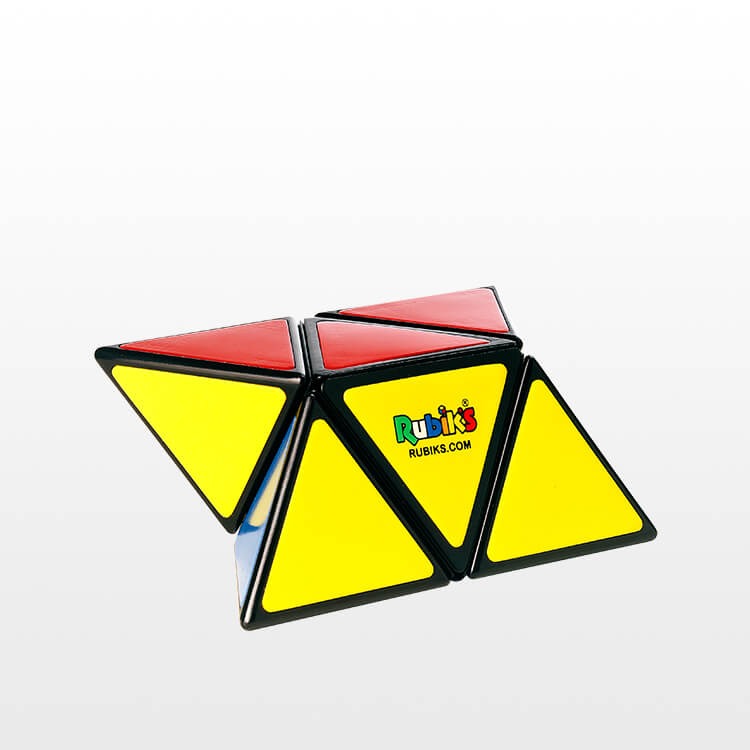
- The triangle Rubik’s Cube, also known as the Pyraminx, is a tetrahedron-shaped puzzle that features four triangular faces. Each face can rotate independently, enabling diverse moves to achieve the goal of uniform color on each side.
- Compared to traditional cubic puzzles, the Pyraminx has a simpler structure with fewer pieces, which allows for quicker solutions, yet still requires logic and strategy.
2. Key Differences from Traditional Cubes
- Rotational Mechanics:
- The Pyraminx operates on different rotational axes than the classic 3×3 cube. This leads to unique patterns in solving and requires different algorithms that cater specifically to its triangular shape.
- Understanding the cube’s mechanics will highlight why certain techniques are essential in mastering the Pyraminx. For instance, the way pieces move adds complexity, even if it appears simpler at first glance.
3. Essential Terminology
- Familiar Terms:
- As you delve deeper into solving the Pyraminx, it’s essential to familiarize yourself with vocabulary specific to this puzzle. Terms like “tip,” “edge,” and “corner” play a significant role in discussing strategies effectively.
- This understanding extends beyond basic definitions; knowing how each piece interacts will enhance your ability to create and execute effective algorithms.
Advanced Techniques for Expert Solvers
1. Algorithm Mastery
- Learning Key Algorithms:
- Mastering algorithms is crucial for triangle rubik’s cube solver efficiently. Familiarize yourself with sequences such as “R U R’ U'” and variations suited specifically for the Pyraminx.
- By building a repertoire of algorithms, you enable yourself to respond quickly to various situations and configurations during a solve. This foundational knowledge is imperative for speedcubing.
2. Speedcubing Strategies
- Implementing Speed Techniques:
- Speedcubing involves executing moves with speed and precision. One valuable strategy is to minimize pauses between algorithm executions. Instead of hesitating, allow your hands to transition smoothly from one move to the next.
- Regular practice under timed conditions will foster the subconscious ability to react without overthinking each step, leading to remarkable improvements in solving speed.

3. Utilizing Finger Tricks
- Enhancing Performance with Finger Tricks:
- Finger tricks enable cubers to perform certain moves more efficiently. Learning how to apply finger tricks for specific algorithms can dramatically decrease your solving time.
- For example, instead of moving an entire face with the palm, using just your fingers can provide much quicker results. As you incorporate finger tricks into your practice, focus on building muscle memory that allows for fluid movement.
4. Optimizing Your Solving Process
- Creating a Personal Strategy:
- Every cuber develops a personal strategy for approaching the Pyraminx. Consider how you prefer to handle the different layers and pieces, which will lead you to discover what works best for you.
- Through experimentation, you can adapt existing algorithms or find shortcuts that cater specifically to your solving style, providing a tailored experience that can yield quicker solutions.
Troubleshooting and Problem-Solving Techniques
1. Analyzing Your Mistakes
- Understanding Common Errors:
- As you advance, it’s vital to analyze your mistakes. Reviewing your solves can help identify recurring issues and areas for improvement. Create a log that tracks your solves to gain insights.
- This form of self-reflection helps in recognizing patterns in your solving style and encourages personal growth as a cuber.
2. Effective Recovery Moves
- Practicing Recovery Techniques:
- Recovery algorithms are essential for when you inadvertently scramble progress during a solve. Regularly practicing these moves prepares you to regain your position efficiently.
- Knowing how to recover quickly not only reduces frustration but also minimizes the time lost.
3. Dealing with Scenarios
1. Adapting to Different Scenarios
- Flexibility in Solving:
- Understanding how to adapt your solving techniques for various situations is crucial in both competitive events and casual play. Each competition may present different challenges, and being prepared allows you to adjust your approach on the fly.
- This flexibility not only helps in competitions but also enhances your overall enjoyment of the puzzle, as it allows for creative problem-solving.
- Recognition of Scenarios:
- Familiarize yourself with different scenarios that commonly arise during a solve. This may include certain patterns or configurations that frequently occur and can be difficult to navigate.
- Recognizing these scenarios ahead of time will equip you with the knowledge needed to implement appropriate strategies swiftly.
2. Remaining Calm Under Pressure
- Managing Complex Cases:
- When confronted with a complex case, it’s natural to feel a sense of urgency or panic. However, maintaining composure is vital. Take a deep breath and remind yourself of your training and preparation.
- Instead of rushing through moves and potentially making errors, focus on employing effective recovery techniques that you have practiced.
- Utilizing Your Skills:
- Relying on your repertoire of recovery techniques can help you regain control of the puzzle when things don’t go as planned. This is where prior practice pays off, as familiarity with various techniques allows for more intuitive responses.
- Your response to unexpected situations can greatly influence your success, making it crucial to know how to revert to previous configurations.
3. Developing Problem-Solving Strategies
- Creating a Strategy Set:
- By proactively developing a collection of strategies for common problematic configurations, you’ll enhance your problem-solving toolkit. This means identifying the most challenging scenarios you face and crafting a specific approach for each.
- Documenting these strategies can serve as a reference during practice sessions and offers a way to track your progress and understanding over time.
- Becoming More Adept:
- As you become more experienced with various configurations, you will find yourself developing confidence in your ability to navigate unexpected challenges. This confidence translates into improved performance in both personal and competitive settings.
- Regularly revisiting these strategies during practice helps reinforce your ability to think critically about a solve, preparing you for future challenges.
4. Emphasizing Continuous Learning
- Review and Adjust:
- After each solving session, take time to review which strategies worked well and which need refinement. Continuous learning is key to improving your skills as a cuber.
- Gathering feedback from fellow cubers or analyzing your solves can provide valuable insights into how you can adjust your strategies for better outcomes.
- Staying Open to New Techniques:
- The world of cubing is constantly evolving, with new techniques and strategies emerging. Stay open to learning from others and adapting your approach based on new information.
- Workshops, online forums, and discussion groups can be great resources for discovering innovative solutions to complex situations.
Frequently Asked Questions
1. How to solve triangular Rubik’s cube?
To solve a triangular Rubik’s Cube, start by familiarizing yourself with standard algorithms specific to its unique structure. Practice key algorithms while keeping the piece orientation in mind, and aim for consistency in your movements.

2. Is Pyraminx easier than 3×3?
Many cubers find the Pyraminx easier than the standard 3×3 cube due to its simpler mechanics and fewer pieces. However, proficiency in any puzzle depends on the individual’s experience and understanding.
3. Can ChatGPT solve a Rubik’s Cube?
While ChatGPT can provide algorithms and step-by-step instructions for solving a Rubik’s Cube, it does not have the capability to physically solve cubes. It can serve as a valuable resource for learning techniques and gaining insights.
4. How to calculate triangle cube?
Calculating the total combinations for the triangle cube can be complex. The Pyraminx has 75,582 possible states. However, mastering its algorithms remains more practical than aiming to memorize every position.
Conclusion
In conclusion, becoming proficient with the triangle Rubik’s Cube solver requires dedication and practice. By mastering advanced techniques and learning new algorithms, you can elevate your cubing skills to expert levels. As your understanding deepens, employing strategies such as speedcubing and finger tricks will drastically reduce your solving time.
Engaging with the competitive cubing community, analyzing your mistakes, and practicing recovery moves can further enhance your solving experience. Remember, patience and consistent practice produce the best results. Dive into the exciting world of the triangle Rubik’s Cube, and enjoy the journey as you rise to the status of an expert triangle rubik’s cube solver!
By following the tips outlined in this guide, you can build a solid foundation to excel in your cubing journey. Happy cubing!